Playa de la Caleta de Maro: Visitor Guide
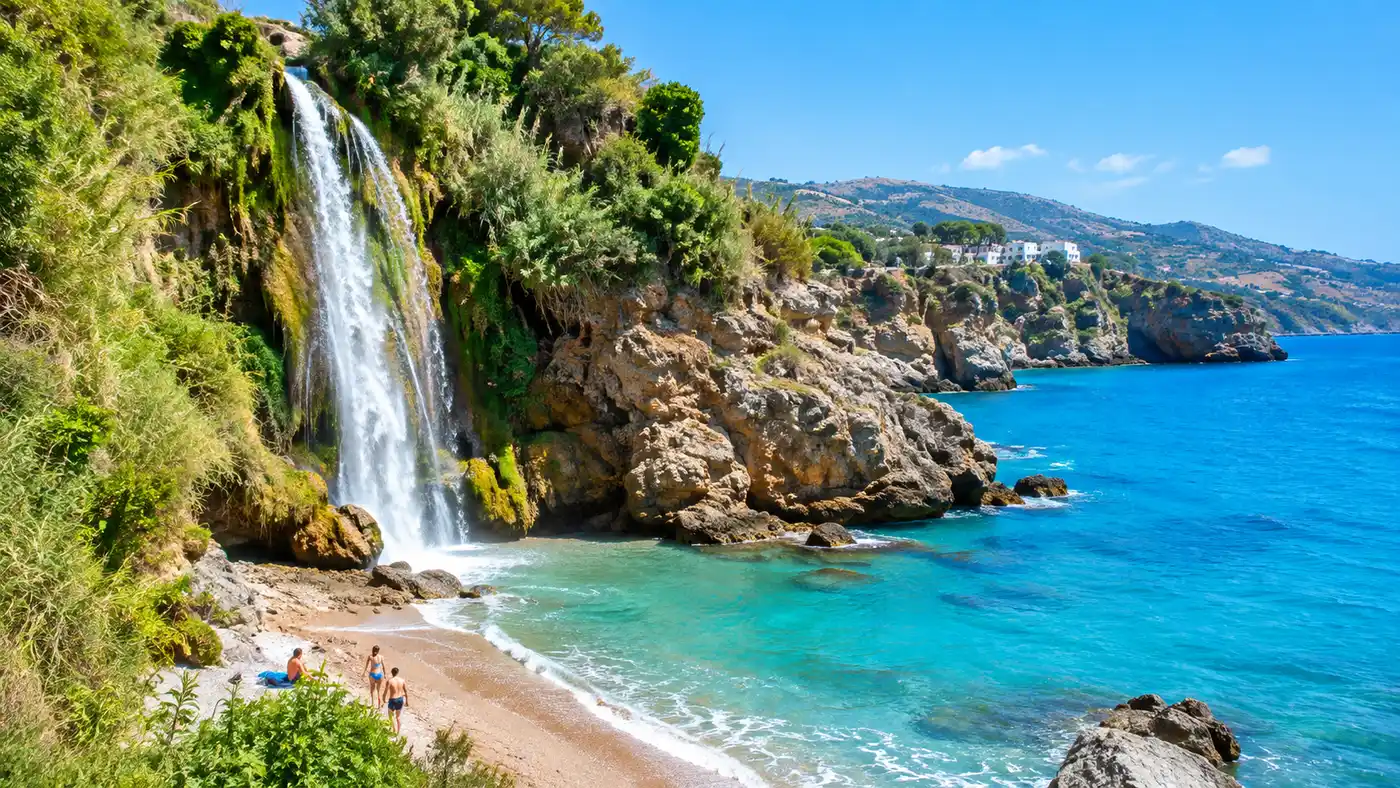
Most people heading toward the cliffs east of Nerja end up clustered on the wide sand of the main cove, completely missing the narrow footpath cutting through the cane stalks a few hundred meters away. If you peel off the paved road early and walk down through the greenhouse terraces, you reach playa de la caleta de maro, a wilder, rougher cove flanked by sheer rock and thick stands of wild sugar cane. It feels worlds apart from the umbrella-packed resorts along the Costa del Sol. The water here is shockingly clear, the shore is rocky, and you will not find a single beach bar selling cold pints of beer.
I first stumbled down this path on a blazing Tuesday in late June when the main bay was already gridlocked by mid-morning. What I found was a sheltered stretch of coarse slate-colored sand where locals read novels in the shade of sea boulders, swimmers drift quietly over posidonia meadows, and nobody plays loud music through bluetooth speakers. This guide covers how to reach the shoreline without getting lost in the scrub, what the conditions are actually like on the seabed, what you need to drag along with you, and why this quiet inlet remains one of the best coastal escapes in Andalusia.
Book your maro waterfall experience:
Finding the Hidden Trail Down to Playa Caleta de Maro
Getting to the sand takes some legwork. You cannot park at the water, and any GPS telling you there is a drive-down ramp is mistaken. The journey starts up in the sleepy white settlement of Maro, which sits perched on the bluff above the Mediterranean. If you take the time to explore the quiet streets of Maro village before heading down, you will see it moves at a tranquil pace that matches this coastline. Most visitors leave their cars in the public dirt lot near the town square or along the road leading out toward the agricultural fields. From there, your legs do the rest.
Walk south out of the village past small farming plots filled with avocado trees, cherimoyas, and plastic-roofed plant nurseries. The pavement soon peters out into a dusty track. Look for a narrow gap between dry stone walls and towering giant reeds, known locally as cañaverales. The path turns into a long flight of rough concrete steps, interspersed with hard-packed dirt ramps that wind steeply down the side of the barranco. It is about an 18-minute walk from the edge of town, depending on how heavily loaded your backpack happens to be. There are roughly 140 uneven steps near the bottom where the slope gets serious.
Pro tip: Wear proper sandals or lightweight sneakers on the descent. The concrete steps are cracked in spots, and dry reed needles can easily pierce straight through thin foam flip-flops.
Halfway down, the smell changes completely. The dry scent of dust, rosemary, and tomato vines gives way to damp ocean salt and drying kelp. The reeds grow so high on both flanks that you barely glimpse the sea until you make the final dogleg turn around an outcrop of pale limestone. Suddenly the canopy opens up, and you step out onto the quiet eastern edge of the cove.
Going back up at the end of the day is another story. After baking in the sun for six hours, that same flight of 140 steps feels three times longer than it did at 10:00 AM. Pace yourself on the climb out, save half a bottle of warm water for the hike up, and do not attempt it during the absolute peak heat of 3:00 PM if you struggle with steep inclines.
What to Expect on the Shoreline of La Caleta de Maro Beach
The shoreline of la caleta de maro beach stretches for roughly 400 meters, though the usable dry area expands and shrinks dramatically with the tides. Do not arrive expecting powdery white sand. The surface underfoot is a mix of dark gray volcanic-looking grit, coarse pea-gravel, and smooth flat stones. It does not blow around in the wind or stick to your sun cream like fine dust does, which is a blessing, but it can be brutally hot on bare feet once the midday sun hits it.
Because the cove sits tucked inside the Maro-Cerro Gordo cliffs, the atmosphere stays relaxed and distinctly uncommercial. There are no sunbed concessions, no pedal boats for hire, no public toilets, and zero lifeguards on watch. If you want shade, you either pack your own sturdy umbrella or you claim one of the natural rock alcoves beneath the western cliff line early in the morning.
Note: Caleta is historically clothing-optional. While textile bathers and families visit regularly, you will share the shoreline with naturists. Mutual respect is the unspoken rule here.
The crowd here tends to be a mix of local couples, foreign hikers who found the path by accident, and long-term campers from nearby towns. It is remarkably quiet compared to neighboring bays. You hear the water lap against the stones, the occasional gull crying overhead, and the wind rattling the dry canes in the gully behind you. That absence of resort noise is precisely why people walk all the way down here.
Natural shade creeps across the western edge of the beach by around 4:30 PM as the sun ducks behind the headland. If you sunburn easily, that late afternoon shadow provides welcome relief, though it can make the sea breeze feel cool once you climb out of the water.
Comparing Playa de la Caleta de Maro to Playa de Maro
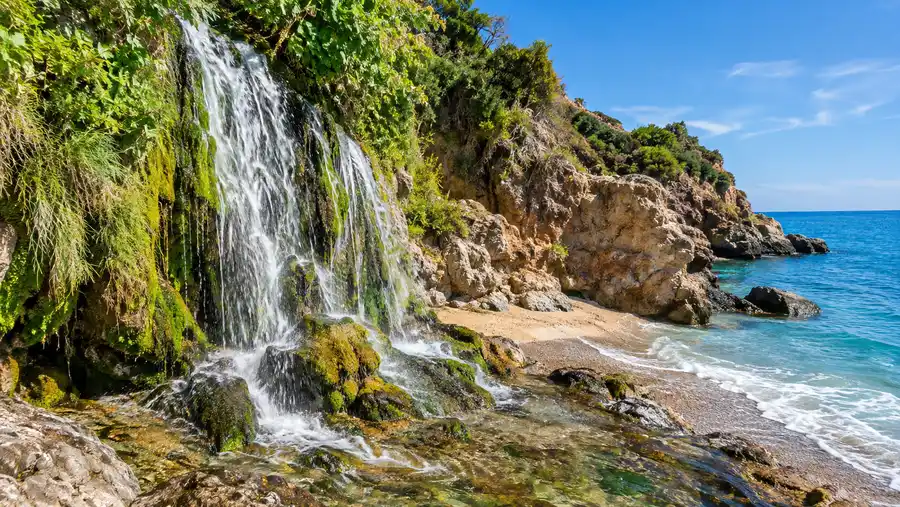
Travelers routinely mix up these two spots because their names are almost identical and they share the same coastal stretch. The main bay, which you can read all about in our guide to Playa de Maro, is wider, busier, and far more developed. It caters to tour groups, kayakers, and day-tripping families looking for easy amenities.
Caleta sits just on the other side of a rocky bluff, but the personality of the beach is entirely different. Where the primary bay has kayak outfitters barking instructions through megaphones, Caleta has solitude. Where the main beach has a paved road right to the sand, Caleta forces you to walk down a ravine through agricultural scrub.
| Feature | Playa de la Caleta de Maro | Playa de Maro |
|---|---|---|
| Access method | Steep walking path and steps (15-20 min) | Paved road, seasonal shuttle, or road walk |
| Beach services | None (bring your own provisions) | Chiringuito, toilets, showers, kayak rental |
| Typical crowd level | Moderate to low, very peaceful | Extremely crowded June through September |
| Clothing preference | Mixed / clothing-optional friendly | Traditional swimwear |
| Snorkeling access | Direct from quiet rocky shelves | Good, but high kayak traffic in summer |
If you have toddlers, mobility issues, or a desire for a plate of grilled sardines and an icy draft beer at 2:00 PM, choose the main beach. If you want to finish an entire paperback without hearing a neighbor's radio, take the path to Caleta instead.
Book your maro waterfall experience:
Snorkeling and Water Conditions at Playa de la Caleta de Maro
The bay forms part of the Paraje Natural Acantilados de Maro-Cerro Gordo, a protected marine reserve that stretches along the coastline toward the province of Granada. Because commercial fishing is heavily restricted inside this marine belt, sea life thrives right up against the waterline. The underwater visibility frequently reaches 15 meters on calm mornings when the poniente wind is asleep.
Step past the initial gravel break and the seafloor drops off sharply within four or five paces. You find yourself suspended over massive limestone boulders coated in green and rust-colored algae, surrounded by schools of two-banded sea bream and striped damselfish. Sea urchins nestle into every depression in the rock, so floating above the bottom rather than walking on it is a wise safety measure.
- Octopus dens: Search along the base of the rock reef on the eastern edge; octopuses often pile small white clam shells outside their crevices.
- Posidonia meadows: Dense patches of these green aquatic grasses grow in five meters of water, sheltering juvenile cuttlefish and pipefish.
- Submerged sea arches: Swim out around the western headland on calm days to find submerged swim-throughs and narrow rocky chimneys.
- Surface conditions: Water is glassy in the morning, but afternoon thermal breezes can kick up small surface chop by 2:00 PM.
I once spent an hour following an enormous common stingray gliding across the sandy patches just outside the reed line. It circled slowly, flapping its wings through the pale silt without caring that I was floating three feet above its back. You rarely see that kind of wildlife in the crowded swimming zones closer to Nerja town.
Watch out for jellyfish during the dog days of late July and August. The mauve stinger (Pelagia noctiluca) occasionally drifts in when warm winds push eastern swells into the bay. If you see pinkish translucent blobs near the rocky drop-offs, stay out of the water or swim with a lightweight rash guard on.
Packing Essentials for a Day at Playa Caleta de Maro
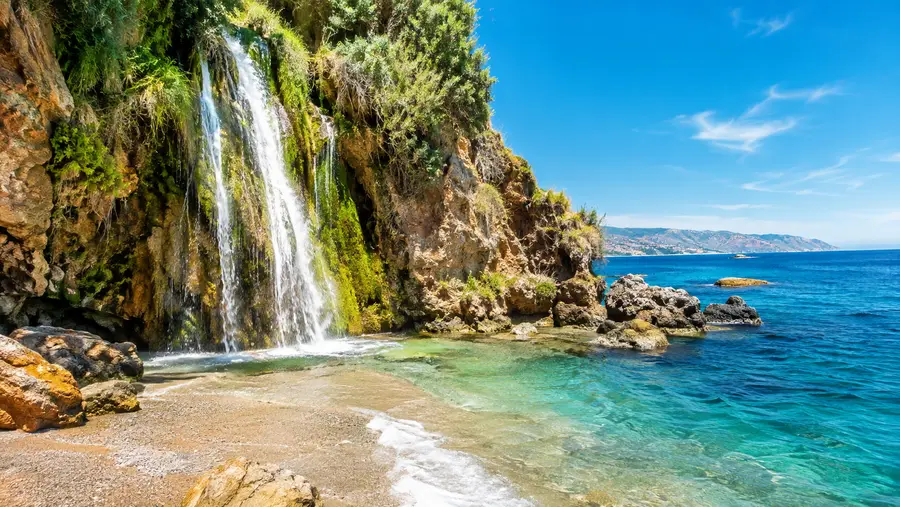
Because there is nowhere to buy so much as a bottle of mineral water, self-reliance is mandatory. If you forget your sunscreen or your drinking flask, your day will end early. The walk back up to the village is far too steep to do on a whim just for a bag of crisps.
The pebbles on the beach are tough on joints. A standard beach towel laid directly over stone will leave you stiff after forty minutes. Bringing a padded camping roll or an inflatable sleeping pad makes an immense difference to your comfort levels.
- Drinking water: Carry at least 2.5 liters per adult on warm days; the climb out dehydrates you rapidly.
- Neoprene swim booties: Entering and exiting the surf over slippery, tumbled stones is much easier with grippy soles.
- Heavy-duty trash sack: You must pack out every scrap of waste you produce, including fruit peels and cigarette ends.
- Snorkel mask and snorkel: The water clarity is the main highlight of the bay, so leaving your mask behind is a mistake.
- Sun umbrella with sand anchor: The rocky soil can make setting an umbrella difficult, so weigh the base down with heavy river stones.
Keep your gear inside a comfortable backpack rather than over-the-shoulder tote bags. You will want both hands free when navigating the broken concrete stairs and loose gravel slopes on the descent through the ravine.
Frequently Asked Questions about playa de la caleta de maro
Is Playa de la Caleta de Maro a nudist beach?
It is traditionally clothing-optional. You will see both naturists and visitors wearing traditional swimwear sharing the beach comfortably without any fuss.
Can you drive directly down to the beach?
No, there is no vehicular access. You must park up in Maro village and walk down the designated walking trail through the cane fields and stone steps.
Are there any restaurants or toilets at Caleta de Maro?
There are no services whatsoever. No chiringuitos, toilets, freshwater showers, or lifeguards operate on this cove, so you must bring everything you need.
Quick Reference
- Access: 15-20 min steep walk down stairs from Maro
- Surface: Dark sand mixed with rounded pebbles and gravel
- Facilities: None (no toilets, showers, or food stalls)
- Atmosphere: Quiet, wild, clothing-optional friendly
Book your maro waterfall experience:
The Bottom Line
If your idea of a great holiday involves beachside waitstaff bringing sangria directly to a padded sun lounger, skip this bay entirely. You will hate the walk down, curse the rocky shoreline, and dread the sweaty trek back to your car. But if you value clear Mediterranean water, wild coastal views, and the quiet satisfaction of finding a spot that requires actual effort to reach, playa de la caleta de maro delivers something increasingly rare along southern Spain: a beach that still feels like a secret discovery.
Read more about maro waterfall.